Overview
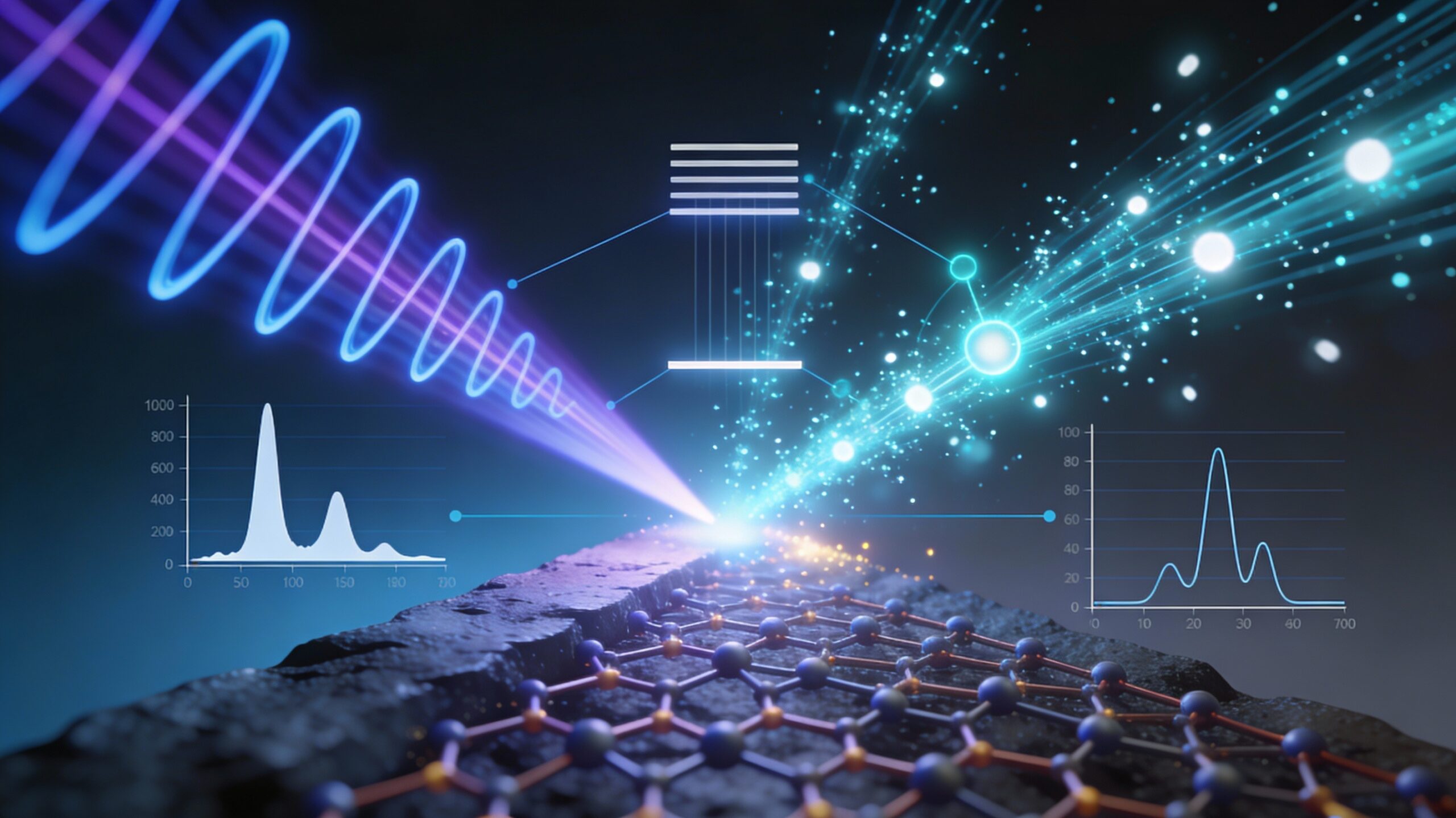
From the (i) observation of the photoelectric effect by Hertz in 1887, to (ii) Thomson’s demonstration that the emitted current consisted of electrons in 1898, to (iii) Einstein’s explanation of the effect as a quantum effect (photons) in 1905, to (iv) Siegbahn’s development of an iron-free double-focusing magnetic spectrometer in the late 1940’s and recording of the first high-energy-resolution spectrum of cleaved sodium chloride in 1954, to (v) the introduction of the first commercial XPS instruments, the Hewlett-Packard 5950A and Associated Electrical Industries (AEI) ES100, in 1969, what we now call X-ray photoelectron spectroscopy (XPS) has evolved from a scientific curiosity into a productive analytical technique. As of 2024, XPS is considered to be the most widely used surface analysis method in the World (1). As XPS users for ~15 years and counting, we believe one reason for its popularity is its accessibility. It is easy to get into, especially with modern, highly-automated commercial instrumentation, but challenging to master.
Wikipedia provides a good overview of XPS. In short, XPS is a surface-sensitive quantitative electron spectroscopic technique that probes the topmost 1’s to 10’s of nanometers of a surface, depending on photoexcitation energy. Perhaps the most well-known application of XPS, expanded upon in the routine problem-solving section below, is to identify the chemical elements that exist, as well as their chemical states, within the surface region probed. Numerous textbooks, handbooks, etc. have been published, and the list below includes some of the more prominent ones (2-5).
For semiconductor manufacturers and foundries, XPS is generally well-known, especially for those that require mission-critical problem-solving in surface chemistry and interface characterization. There are multiple factors connected to the business case for manufacturers/foundries to utilize commercial XPS testing services:
- capital efficiency,
- access to specialized expertise,
- process development acceleration,
- time-critical problem-solving, and
- strategic focus on core manufacturing competencies.
Routine problem-solving with XPS
Moderate complexity problem-solving with XPS
Advanced problem-solving with XPS
References
(1) Baer, D. R. & Sherwood, P. M. A. Perspective on the development of XPS and the pioneers who made it possible. Frontiers in Analytical Science 4, (2025).
(2) Briggs, D. & Grant, J. Surface Analysis by Auger and X-Ray Photoelectron Spectroscopy. (IM Publications, 2003).
(3) Hüfner, S. Photoelectron Spectroscopy: Principles and Applications. (Springer-Verlag, Berlin, Heidelberg, 2003).
(4) Hofmann, S. Auger- and X-Ray Photoelectron Spectroscopy in Materials Science: A User-Oriented Guide. (Springer, 2013).
(5) Moulder, J. F., Stickle, W. F., Sobol, P. E. & Bomben, K. D. Handbook of X-Ray Photoelectron Spectroscopy: A Reference Book of Standard Spectra. (Perkin-Elmer Corporation (Physical Electronics), 1992).